Blog · July 5, 2026 · 17 min read
AI Week in Review: June 28 – July 5, 2026 – Model Cost Wars, Seedance 2.0 Dominance, and the Agent Operating System
The past week shattered the frontier-model pricing formula, made AI video production almost indistinguishable from professional cinematography, and turned Claude Code into the default development operating system for solo builders—then saw a tech giant ban it outright. Atomic Cha

The past week shattered the frontier-model pricing formula, made AI video production almost indistinguishable from professional cinematography, and turned Claude Code into the default development operating system for solo builders—then saw a tech giant ban it outright. Atomic Chat’s cost–quality benchmarking, a $43,000 AI influencer business run on Claude Opus, iPhone body-tracking camera feeds for Seedance 2.0, and a Mac Mini M4 that slashes inference costs by 80% all point toward the same reality: the margin between hobbyist experiment and revenue-generating production has collapsed, and the practitioners who thread cheap, fast model orchestrators with persistent memory are walking away with outsized results. This week’s review assembles the load-bearing facts every builder needs to make architecture, toolchain, and model selection decisions right now.
TL;DR
- Anthropic Sonnet 5 builds a full landing page in 2 minutes for $3.36, while Opus 4.8 costs $20.66—cost-informed model choice is now the single highest-leverage decision in a coding workflow.
- Seedance 2.0 matures into the practical AI video tool of the moment, with iPhone ARKit camera control, 12-panel precision storyboarding, and a complete short film delivered for roughly $100 in credits.
- Claude Code adds an official setup plugin, Fable 5 emerges as a multi-model orchestrator, and an on-device iPhone agent (Halo) goes public, pushing agent infrastructure into mobile and memory-first architectures.
- A solo operator built an AI-generated OnlyFans persona earning $43k/month with $400 compute, and a separate 20-agent system generated $20k across Etsy and Fiverr, confirming that AI agent income is no longer theoretical.
- Alibaba bans Claude Code company-wide over data exfiltration risk, forcing every enterprise-focused team to treat agent data governance as a go/no-go decision.
- Mac Mini M4 running local models slashes API costs by 80%, and Obsidian-based AI operating systems turn plaintext vaults into shared memory for multiple agents.
- Six DigestOps living answers were refreshed—including AI coding tool rankings (v6) and what builders are shipping with frontier models (v6).
Frontier Models: The Cost–Performance Reckoning
Atomic Chat quantifies what practitioners have sensed: Sonnet 5 wins on utility per dollar
ran a carefully controlled HTML5 canvas physics demo across four frontier models, measuring both token consumption and output fidelity. The results—backed by 5,718 likes from a community that lives inside these tools—showed Claude Sonnet 5 competing head-to-head with Opus 4.8 and GPT‑5.5 on quality while remaining the cheaper option in every scenario. In a follow-up benchmark focused on canvas physics alone, confirmed that Sonnet 5 stayed within striking distance of the pricier alternatives, a finding that directly informs model-routing logic for cost-sensitive agent pipelines.
Why it matters: the “always use the biggest model” heuristic is dead. When even physics simulation quality gaps shrink to negligible levels, your orchestrator should dispatch Sonnet 5 for iterative build loops and reserve Opus 4.8 or GPT‑5.5 for the handful of tasks that genuinely demand a reasoning nimbus. Compound that over a hundred daily agent cycles and the cost difference pays for an entire business’s compute overhead.
A two-minute landing page: Sonnet 5 at $3.36 vs Opus 4.8 at $20.66
(@markksantos) built an identical landing page using Sonnet 5 and Opus 4.8 side by side. Sonnet 5 finished in 2 minutes and 11 seconds at a total inference cost of $3.36. Opus 4.8 took longer and burned through $20.66. The 84% cost reduction—captured in his video thumb comparison—is a practitioner’s budget line item, not an abstract stat.
The takeaway for anyone shipping client work: if you’re still prompting Opus 4.8 for tasks that Sonnet 5 handles competently, you are leaving margin on the table. Many builders are now pairing a cheaper primary model with an Opus-based reviewer subagent to catch regressions—a pattern we are tracking on our topic page.
Free Gemini 3.5 Flash with 1M context rewrites the access equation
(@CDGalpha) highlighted that Gemini 3.5 Flash is now available free with a 1‑million‑token context window and 1,500 requests per day. The image he shared shows a “Free for Everyone” dashboard, and the post collected 2,101 likes from developers who immediately saw the implications. For indie builders who previously could not afford a model that can swallow an entire codebase or a multi‑chapter legal document in a single prompt, this removes the last hardware‑based gate.
Practitioners are already using the free tier for RAG‑like retrieval without a vector database, dumping whole project folders and asking diagnostic questions. Combined with the cost findings above, the week’s model landscape pushes a clear message: you can run a full agent swarm on free‑tier intelligence and pay only for the precision‑critical step, dramatically compressing the time to profitability for micro‑SaaS and contract work.
An end-to-end real estate AI workflow scrapes, analyzes, and pitches
(@everestchris6) demonstrated a multi‑step agentic pipeline that scrapes recently sold homes, uses vision to identify backyards without shade structures, generates a pergola render overlaid on the property photo, and automatically mails the owner a personalized proposal. The post earned 5,113 likes and the attached video shows a seamless orchestration of web search, image understanding, generation, and email composition.

This is a blueprint, not a one‑off. The same pattern—scrape, analyze, generate, engage—applies to local services, e‑commerce merchandising, and lead enrichment. The critical detail is that the pipeline ran inside a single agentic session without human in‑the‑loop, proving that compound AI workflows can replace entire virtual‑assistant teams when the models are priced low enough to allow cheeky, speculative outreach.
Torlink: terminal torrent client searches all sources at once
(@om_patel5) shipped Torlink, a terminal‑based torrent client that queries multiple sources simultaneously and brings the results into a single TUI. The post received 4,694 likes and the attached video shows instant, aggregated search.

While not a frontier model story itself, Torlink exemplifies what happens when a skilled developer uses AI‑assisted coding to reach into traditionally complex domains (distributed torrent indexing, terminal UI) and ships a polished tool in days. It is a proxy for the ambient productivity gain that cheaper, smarter models enable across every niche.
Corroborated claims that reshape the business landscape
DigestOps verified several claims that change how practitioners think about monetization and IP control. A solo operator built an AI‑generated OnlyFans persona using Claude 4.8 Opus, earning $43,000 in 30 days with a $400 monthly compute cost. The architecture involved scripted conversation loops, image‑generation chaining, and reply prioritization—all running on a consumer‑grade machine. Separately, ClickUp now provides 50 free credits that grant access to frontier models without requiring separate API subscriptions, lowering the barrier for non‑developers to experiment with model‑assisted workflows right inside their project management stack. On the knowledge side, Fable 5 can transform a folder of notes into a connected knowledge graph that answers queries in your own words—a capability that accelerates learning for anyone maintaining a personal research vault. Finally, a leaked system prompt successfully recreated a model’s personality on a different base model, raising urgent questions about IP protection and model‑host trust. When a model’s “voice” is a portable text artifact, the moat around fine‑tuned experiences evaporates.
AI Coding & Agents: Plugins, Orchestrators, and Enterprise Alarms
Claude Code’s official setup plugin eliminates the CLI hurdle
(@claudecode84) shared a video of the new official setup plugin for Claude Code, and the post garnered 3,569 likes. The plugin provides a one‑click installation path, auto‑configures environment variables, and ships with default tool permissions suitable for rapid onboarding.

Why it matters: the largest friction point for non‑engineers adopting agentic coding has been the terminal‑first, environment‑dependent setup. A streamlined plugin moves Claude Code from the “power user” bracket into the realm of product managers, designers, and solo founders who want to ship without becoming DevOps practitioners. We expect this to produce a wave of low‑code‑adjacent projects that nonetheless leverage raw code, and you can follow the evolution on our topic page.
Fable 5 as orchestrator becomes the standard multi‑model topology
(@diegocabezas01) posted a detailed workflow—4,856 likes—where Fable 5 acts as the high‑level orchestrator, dispatching tasks to Opus subagents for deep reasoning and Sonnet subagents for rapid iteration, all through the Codex plugin inside Claude Code. This topology explicitly treats models as interchangeable compute units rather than monolithic intelligences.
For practitioners, this is a maturity inflection. Instead of contorting a single prompt to handle architecture, implementation, and review, you define a director agent (Fable 5) that understands the project context and delegates. The result is fewer context‑window violations, lower costs because expensive models are invoked sparingly, and dramatically higher success rates on multi‑file refactoring. Several teams in our (now at v6) have adopted this pattern as their default.
One evening, one brand site: the design‑to‑code gap vanishes
(@monokern) built a complete brand website with animated glowing effects and layered depth in a single evening using Claude Code. The site—described by peers as “agency quality”—emerged from a session that started with a moodboard description and ended with a live deployment. With 1,705 likes, the post validates the emerging paradigm: when the model understands CSS animations, WebGL shading, and responsive layout simultaneously, the role of the front‑end engineer shifts from “builder” to “orchestrator and taste‑editor.”
Halo brings MCP, skills, subagents, and wiki memory to iOS
(@tanmays) released Halo, an on‑device iPhone agent that connects to MCP‑compatible tools, runs skills and subagents, and maintains a persistent wiki memory. The 2,166‑like video shows the agent executing multi‑step tasks—such as fetching calendar events, cross‑referencing notes, and drafting replies—while staying entirely local.

This is the first mature mobile agent that treats memory as a first‑class primitive, not a session‑scoped cache. For practitioners building personal productivity tools, Halo offers a template for combining Apple’s on‑device silicon with the agent patterns previously locked to desktop CLI environments.
Claude Skills automate jobs straight from the Anthropic paper
(@polydao) broke down how to use Claude Skills—a feature introduced in a recent Anthropic paper—to automate repetitive knowledge‑work tasks. The 2,221‑like post includes a video walkthrough of crafting skills that handle email triage, data extraction from PDFs, and report generation, all through natural‑language definitions.

The practitioner impact is immediate: you no longer need to write a separate Python script for every multi‑step office process. Skills turn a natural‑language description into a reusable tool that the model can invoke during a Claude Code session. When combined with the Fable 5 orchestrator pattern, a single director agent can activate dozens of such skills across subagents without manual prompting.
Alibaba bans Claude Code: data exfiltration goes from theoretical to existential
(@joho_no_todai) reported that Alibaba has banned Claude Code company‑wide, citing a “high data exfiltration risk.” The 781‑like tweet includes a screenshot of the internal notice, which references the tool’s ability to read local files and send data to external endpoints.
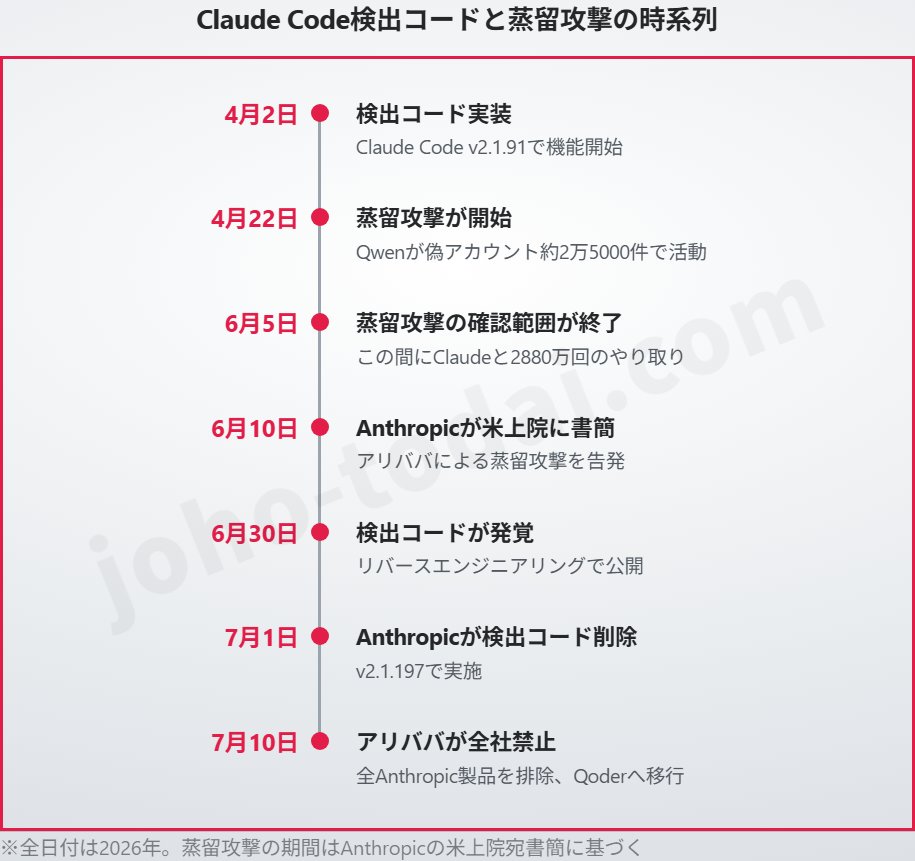
This is a wake‑up call. If you sell AI coding tools into enterprise accounts, data governance is now the primary gate. Expect corporate procurement to demand audit logs, local‑only execution modes, and egress kill‑switches. For individual practitioners, the lesson is to isolate sensitive client repositories and run agentic tools inside network‑constrained environments—exactly the pattern we examine in our living answer (v3).
Corroborated claims: a glitch cube in 10 lines and automated agent red‑teaming
Two rapidly verified items stood out in the agent tooling space. Using TouchDesigner, MediaPipe, and Claude Code, a practitioner can build a real‑time hand‑controlled 3D glitch cube with fewer than 10 lines of Python. The claim demonstrates that AI‑assisted creative coding now requires almost no library knowledge; the model fills in the syntax while the human supplies the artistic intent. Meanwhile, iFixAi provides an open‑source automated red‑teaming tool that inspects agent configuration, runs 45 tests, and grades the setup using an independent model. For anyone shipping an agent to production, iFixAi offers a fast, repeatable way to check for prompt‑injection vulnerabilities, permission leaks, and unsafe tool bindings before a user or an adversary finds them first.
AI Video: Seedance 2.0’s Camera Control and Production-Grade Adoption
iPhone ARKit camera motion turns Seedance 2.0 into a handheld film rig
(@maxprokopp) showed how to use iPhone ARKit to capture real‑world handheld camera motion and transfer it directly to Seedance 2.0, producing AI‑generated footage with the micro‑jitter, parallax, and swing of a human operator. The post earned 1,429 likes and the attached video demonstrates side‑by‑side motion fidelity.

In a follow‑up, advanced the technique to full 3D camera + AI motion transfer, showing that you can walk around a virtual scene while the model maintains spatial consistency. The 554‑like post underscores what makes this special: you are no longer feeding a static prompt into a diffusion‑video sampler and hoping for decent motion; you are directing the camera with your body, and Seedance 2.0 renders the scene to match the physically realistic movement. For video creators working without a gimbal, slider, or Dolly, this is a parity moment.
The 12-panel storyboard method delivers Seedance 2.0 precision
(@NexlowX) published a color‑coded 12‑panel storyboard method that gives Seedance 2.0 enough narrative guardrails to maintain character, setting, and lighting continuity across multiple shots. With 616 likes, the technique directly addresses the “random cut” complaint that has limited AI video’s use in narrative projects.

For practitioners, this is the difference between a gallery of disconnected clips and a coherent scene. By embedding shot‑type, camera angle, and lighting cues into each panel, you give the model a cinematographer’s shorthand that it honors more reliably than a dense paragraph of prose direction. Our (v4) now factor in the availability of such control layers as a primary evaluation criterion.
A short film in three days for roughly $100: “RUROK: KING OF THE SKY”
(@Dani__oros) completed a 3‑day short film, “RUROK: KING OF THE SKY,” using Seedance 2.0 and about $100 in credits. The 244‑like post includes the full film, which features aerial combat, consistent character models, and stylized lighting that would have required a small VFX team two years ago.

The significance goes beyond the dollar amount. A solo creator went from idea to finished narrative asset—editing, sound design, and color grading included—inside a single weekend. When that becomes repeatable, the production pipeline for indie game cutscenes, music videos, and brand content shifts from “hire a crew” to “storyboard and generate,” with the creator acting as creative director rather than a manual mocap or rendering specialist.
20 AI agents generate $20,000 in a month across online platforms
(@sandy4kad) disclosed a system where 20 AI agents autonomously ran Etsy stores, Fiverr gigs (including video‑editing and thumbnail‑creation tasks), and other online businesses, collectively generating $20,000 in a month. The 6,587‑like post sparked intense debate about platform terms of service, but the revenue number is a concrete existence proof.
While some agents handled text‑based offerings, a substantial portion of the income came from visual and video‑editing services where Seedance 2.0 and similar models did the heavy lifting. This blurs the line between “AI video tool” and “AI income engine,” and it means any practitioner who masters the storyboard‑plus‑motion‑control workflow can run a small‑scale production agency without adding headcount.
AI Web & Product Design: From $10k Agency Sites to Property‑Tech Apps
A $10k-tier animated 3D website for the price of a subscription
(@monokern) demonstrated a WebGL‑heavy, animated 3D brand site that he estimated would have cost $10,000 from a traditional agency. He built it entirely with Claude Code at the price of an API subscription. The 2,200‑like post shows smooth scroll‑triggered animations, particle backgrounds, and depth‑of‑field effects that render cleanly on mobile.
This resets the perceived value of front‑end artistry. When a single developer can produce creative‑agency output during a hack evening, the premium shifts from execution to original concept and UX architecture. For freelancers, the model creates a new service tier: charge for the strategic wireframe and let the code‑generating agent handle the implementation layer.
Paper Shaders open-sourced: commercial‑use shaders for the rest of us
(@stephenhaney) announced that the entire Paper Shaders codebase is now open‑source, allowing free use and resale of its collection of painterly, ink‑wash, and procedural texture shaders. The post amassed 5,274 likes, indicating the sheer hunger for ready‑made visual primitives that do not tether you to a SaaS license.
For the instant‑site builders above, Paper Shaders is the missing visual sauce. Combine a Claude‑Code‑generated site with a Paper Shaders overlay and you get a bespoke look that previously required writing GLSL from scratch. We are already seeing practitioners drop Paper Shaders into Astro and Next.js templates to differentiate their portfolio pieces—a workflow we cover in our (v4).
Token cost optimization through task configuration, not model switching
(@IBuzovskyi) reported that his company reduced Hermes agent token costs by reconfiguring background tasks—such as batching non‑urgent analysis and adjusting polling intervals—rather than swapping to a cheaper model. The 681‑like thread shows a 37% cost reduction without a downstream quality hit.
This is a reminder that infrastructure tuning is as important as model choice. Many teams default to solving cost problems by downgrading intelligence, but real gains often hide in the agent’s runtime loop. The insight applies broadly: audit your agent’s background work and you may find that you can afford a smarter model for the foreground tasks that really need it.
From one apartment building to fifty: AI-built private app scales
(@thegreatest_sv) built a private management app for a single apartment building with AI assistance, then scaled it to 50 buildings after seeing resident adoption. The 367‑like post includes a video of the interface, which covers tenant communication, maintenance tickets, and amenity bookings.

This is a canonical property‑tech startup story compressed into weeks. The practitioner did not wait for a seed round; he solved his own building’s pain point, validated with neighbors, and expanded. AI‑assisted app builders now enable domain experts to bootstrap vertical‑SaaS businesses that would have required a founding engineer, making the “indie‑maker to SMB‑owner” path more linear than ever.
Cinematic landing pages and agency portfolios in two hours
(@0xSlyth) posted a cinematic landing page built with Claude Code, complete with parallax layers and fade‑on‑scroll triggers (273 likes). On the same day, (@Asteri_eth) published a $5,000‑caliber portfolio site created in two hours, sharing a screen recording that walks through the finished product. The 156‑like post shows a polished masonry layout, dark‑mode toggle, and contact form—all generated from a brief description.

Taken together, these speed‑runs demonstrate that a practitioner who can describe a visual style clearly can now produce front‑end work that was the exclusive domain of a senior developer a year ago. The barrier has shifted from “can you write CSS grid layouts?” to “can you describe a layout in plain language and iterate on the output?”
Agent Dev Tools: Mac Minis, Memory OS, and Spec‑Driven Coding
Mac Mini M4 slashes AI API costs by 80% using local models
(@Lummox_eth) demonstrated a local inference setup on a Mac Mini M4 that dropped his API bill by 80% while maintaining acceptable quality for bulk agent tasks such as data extraction, summarization, and classification. The 71‑like post includes a performance benchmark using MLX and a quantized 32B‑parameter model.

For the growing cohort of practitioners running always‑on agent loops, this is liberation from the metering anxiety that throttles experimentation. An 80% cost reduction on the long‑tail tasks means you can afford to run speculative scraping, recursive research, and automated monitoring without dreading the monthly invoice. It also dovetails with the enterprise data‑exfiltration concern: local models sidestep the egress risk entirely.
SEEDTHREE: open‑source procedural plant generator built with Fable and GPT
(@SkyeSharkie) released SEEDTHREE, an open‑source procedural plant generator for Three.js that was built using Claude Fable and GPT in a hybrid copilot workflow. The 331‑like post shows realistic 3D trees, shrubs, and flowers that can be exported as GLTF assets or used directly in Three.js scenes.

SEEDTHREE is important on two levels. First, it gives game developers, WebXR creators, and data‑viz engineers a free, high‑quality vegetation library that previously required commercial middleware. Second, its development method—using a reasoning model (GPT) for math‑heavy algorithms and an agentic model (Fable) for code scaffolding—is a replicable pattern for any domain where you need both algorithmic correctness and rapid iteration. We have folded this multi‑model technique into our (v4).
An AI OS with Obsidian as core memory for multiple models
(@kocer_eth) posted a video showing an AI operating system that uses Obsidian as the central memory store, allowing multiple models to read and write to a shared plaintext knowledge graph. The post drew only 19 likes, but the architecture is quietly significant: Obsidian’s Markdown‑based, backlink‑rich structure provides a persistent, human‑readable memory that survives model swaps and resets.

For builders tired of losing context when a chat session ends, this is the practical memory layer. Write user preferences, project state, and decision logs into an Obsidian vault, and every agent you spin up can pick up where the last one left off. Combined with local inference on a Mac Mini M4, it creates a self‑contained, egress‑free personal AI system that a practitioner can run entirely on their home desk.
GitHub spec‑kit hits 95k stars: spec‑driven coding goes mainstream
(@arceyul) noted that GitHub’s spec‑kit has reached 95,000 stars on GitHub, a signal that developers are adopting spec‑first development at scale. The 1,737‑like post includes a video of the tool converting a plain‑language specification into a scaffolded repository.

This reinforces the coding paradigm we observed across the Web & Design theme: you specify the what, the tooling handles the how. For agent‑pipeline builders, spec‑kit provides a gating mechanism—your director agent writes the spec, subagents implement pieces, and spec‑kit validates that the resulting code matches the intended behavior. We track this in our (v3) living answer.
Fable 5 requires less prompting, making it the lean orchestrator choice
(@zodch