Blog · July 12, 2026 · 10 min read
AI Week in Review: Claude Fable 5 Takes Over, GPT‑Realtime‑2.1 Adds Tools, and AI Video Pipelines Go Cinematic (July 5–12, 2026)
Anthropic’s Fable 5 didn’t just arrive—it rearranged the frontier this week. Developers swapped GPT 5.6 out of their UI workflows, turned single slash commands into production websites, and started running entirely autonomous overnight coding sessions. At the same time, OpenAI qu

Anthropic’s Fable 5 didn’t just arrive—it rearranged the frontier this week. Developers swapped GPT 5.6 out of their UI workflows, turned single slash commands into production websites, and started running entirely autonomous overnight coding sessions. At the same time, OpenAI quietly dropped a Realtime update that gives voice agents reasoning and tool use for the same price, Grok 4.5 slipped into Cursor at a price point that matters, Seedance 2.0 proved it can turn a single storyboard into a multi‑scene cinematic short, and Hunyuan Hy3 demolished cost expectations for agent‑physics coding. Practitioners are no longer asking “can AI do this?”—they’re asking “which model, which pipeline, and what’s the cost?”. This week’s signals give clear, load‑bearing answers.
TL;DR
- Claude Fable 5 outperforms GPT 5.6 in UI design and landing‑page generation; single‑command website builds with ClaudeKit are live, and Fable 5 beats Opus 4.8 on 88.9 % of landing‑page matchups when given real creative briefs.
- GPT‑Realtime‑2.1‑mini adds reasoning and tool use for voice agents at zero additional cost; Grok 4.5 arrives in Cursor at competitive pricing just as SpaceX’s acquisition stirs a search spike for Cursor alternatives.
- Seedance 2.0 and Kling MCP enable end‑to‑end cinematic short film generation from a structured JSON prompt; one‑phone lookbook catalogs and restored Roman Empire footage demonstrate that production‑grade AI video is now a pipeline, not a single model.
- Open‑source LingBot‑Video Mixture‑of‑Experts model targets embodied AI; Pocket TTS clones voices from 5 s of audio on a CPU under an MIT license.
- Claude Cowork launches with cross‑device task handoff; Anthropic’s internal tool pattern mirrors Google’s product evolution, while Agent‑Reach open‑sources Claude Code social media research.
- Frontier‑model delegation (Fable 5 for planning, cheap models for execution) is now a documented cost‑performance pattern; Hunyuan Hy3 matches Gemini 3.5 on physics coding at 35× lower cost.
- DigestOps refreshed 7 living answer pages with new data—agents can query everything over MCP.
Frontier Models
The frontier conversation this week wasn’t about a single big launch—it was about how Fable 5 rewired practitioner workflows across coding, design, and autonomous task execution. Simultaneously, open‑source delivered a Mixture‑of‑Experts video model for embodied AI, local LLMs cleared a technical Q&A bar that makes them viable for production RAG, and a voice cloning model that runs on CPU under MIT license appeared out of nowhere. Each development pushes a different corner of the frontier toward a future where you reach for the right model for the job, not the biggest one.

Fable 5 reshapes the frontier workflow
delivered the most consequential head‑to‑head of the week: Claude Fable 5 outperforms GPT‑5.6 in UI design. The comparison isn’t just about pixel‑perfect output; it’s about Fable 5’s ability to autonomously self‑improve and outperform Opus 4.8 on complex tasks at lower cost. For practitioners, that alters the calculus. Instead of pouring tokens into a single large reasoning pass, early adopters now use Fable 5 for planning and reasoning, then delegate execution to cheaper models—a pattern that yields near‑identical results at lower cost. You don’t have to guess what “near‑identical” means; the community already ran the numbers and built the workflows.
That delegation pattern shows up repeatedly in the verification claims surfaced this week. One line, repeated enough to be called consensus: “For Fable 5, using /loop for autonomous multi‑step work and giving objectives instead of step‑by‑step instructions yields better results.” Engineers who treat Fable 5 like a junior coder they must micromanage leave performance on the table. Those who give it a goal and let the /loop primitive iterate, verify, and stop report that shipping becomes an overnight operation.
showed what this looks like from a product angle: a Ramp Agents marketing site built entirely with Next.js, Tailwind, Motion, and MDX using Fable 5 and ClaudeKit’s EngineerKit. The claim that a single slash command can generate a professional website without a designer or developer is no longer aspirational—Abrahamsson’s live build is the evidence. Meanwhile, ran a systematic pairwise test and found Fable 5 beats Opus 4.8 on 88.9 % of landing‑page matchups when given proper creative briefs. That result, combined with the observation that Fable 5 can produce high‑quality, animated websites by combining reference screenshots, pre‑built components, and specific animation tools with iterative prompting, suggests we’ve crossed a threshold where the AI’s design taste stops being the bottleneck; the prompt is.
LingBot‑Video opens MoE to embodied AI
While Fable 5 dominated text‑centric discussion, open‑sourced LingBot‑Video, a Mixture‑of‑Experts video model purpose‑built for embodied AI. Unlike general‑purpose video generators, LingBot‑Video targets agents that need to perceive and act in physical environments—robotics simulation, spatial reasoning tasks, and synthetic data generation for training perception models. The practical implication is that small teams can now run a specialist MoE video model locally without the 8‑GPU barrier typical of frontier video models. For embodied AI labs, this is an infrastructure unlock.
Local LLMs cross the 86 % accuracy boundary for technical Q&A
documented a configuration that pushed local LLMs with RAG to 86 % accuracy on a technical Q&A benchmark. If you’ve been holding back on deploying a local RAG system because you couldn’t squeeze past 75–80 %, this is the week that gap closed. The setup combines aggressive chunking strategies with a reranking model and a carefully curated prompt template, all running on consumer hardware. Paired with tools like Obsidian Mind, which bridges Claude Code into an Obsidian vault for long‑term memory across sessions, the 86 % result makes on‑device technical knowledge bases a real alternative to cloud APIs for proprietary or air‑gapped environments.
Pocket TTS clones a voice from 5 seconds, no GPU
Open‑source voice cloning hit a new practical floor when released Pocket TTS under an MIT license. It clones a voice from just 5 seconds of audio and runs entirely on CPU. In the same week that GPT‑Realtime‑2.1 added tool use to voice agents, Pocket TTS provides the client‑side piece that makes fully local, offline voice agents buildable today. Combine it with a local LLM and a tool‑equipped agent framework, and you’ve got a complete, private assistant stack that fits on a laptop.
For a continuously updated view of how these models stack up and what practitioners are building, see our topic tracker.
AI Coding & Agents
This week’s coding and agent landscape boiled down to two tectonic shifts: the tooling layer is absorbing new models almost as fast as they appear, and the agent runtimes are becoming operating systems for task handoff. Claude Cowork launched with cross‑device continuity, GPT‑Realtime‑2.1 added tool use to voice, Grok 4.5 entered the Cursor IDE right as Cursor’s acquisition made developers hunt for exits, and a quiet Reddit revelation showed Anthropic’s internal tool pattern mirrors Google’s product evolution. The picture is clear: the agent toolchain is being redesigned around delegation, memory, and devices, not a single chat window.
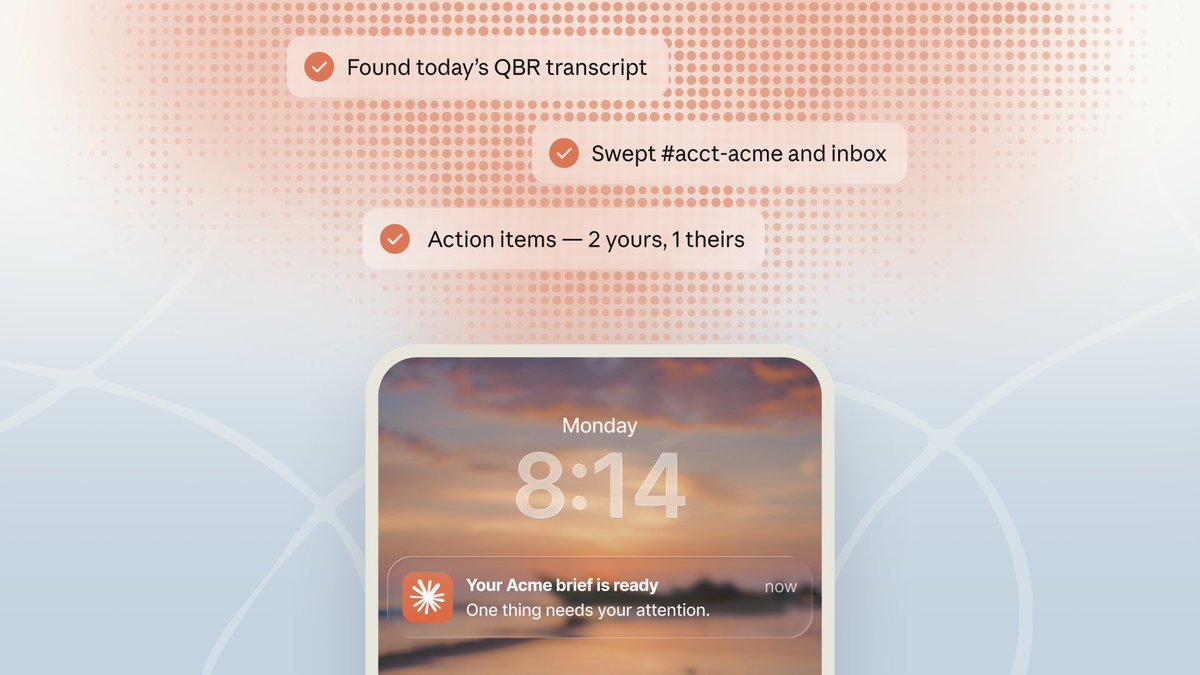
Claude Cowork turns agent sessions into cross‑device workspaces
unveiled Claude Cowork, now available on mobile and web, with a feature that practitioners have been asking for since the first coding agent demos: cross‑device task handoff. Start a research plan on your phone, refine the code on your desktop, and pick up the deployment check on the couch—Cowork preserves the session state and agent context. For anyone who runs Claude Code in a terminal, this is the missing graphical layer that turns an agent from a command‑line tool into a persistent collaborator. noticed the pattern goes deeper: Anthropic’s internal tool structure mirrors Google’s product evolution—first a powerful core, then a layer of distribution and collaboration that locks in workflows. Claude Cowork is that distribution layer, and it signals that Anthropic is building for team adoption, not just individual developer superpowers.
GPT‑Realtime‑2.1‑mini: reasoning and tool use for voice at the same price
shipped GPT‑Realtime‑2.1‑mini, which adds reasoning and tool use to the Realtime voice API without any cost increase. Voice agents that could previously only transcribe and respond now chain tool calls mid‑conversation—fetching data, updating CRMs, or calling internal APIs—while maintaining the sub‑second latency that makes voice interactions feel natural. The fact that this lands in the “mini” tier means you can prototype a voice agent with reasoning‑backed tool execution for fractions of a cent per minute. If you’re building a customer‑support voice agent or a hands‑free coding assistant, today’s architecture just got cheaper and more capable.
Grok 4.5 lands in Cursor, developers look for the exits
confirmed that Grok 4.5 is now available inside Cursor at competitive pricing. Combined with xAI’s push toward raw reasoning throughput, this gives Cursor users a model that differs meaningfully from the Claude‑Sonnet‑Opus axis—one that attempts to blend the fast‑paced generation style of Grok with structured code editing. At the same time, noted a sharp spike in search interest for Cursor alternatives following SpaceX’s acquisition. Developers who want to keep their toolchain independent of a single corporate umbrella are already testing Windsurf, Continue with local models, and other composable options. The practical takeaway: your IDE‑choice lock‑in is now weaker than ever, and this week’s model availability in Cursor makes a multi‑model editing stack more viable if you stay, but also easier to replicate if you leave.
Claude Code excels at multi‑sheet PCB design
Not every agent gain is in web stacks. demonstrated that Fable 5, run through Claude Code, excels at multi‑sheet PCB design over Opus. The workflow involved generating netlist‑aware schematics, managing hierarchical sheets, and outputting fabrication‑ready files—tasks that require spatial reasoning and strict rule adherence. PCB designers who previously used Claude Code only for scripting assistance are now using it for full board layouts, often in a single morning session. The shift is tangible, and it echoes the broader pattern: Claude Code’s /loop and goal features enable autonomous agents that run, verify, and stop without manual prompting, shipping designs (or code) overnight.
Obsidian vaults become searchable AI wikis
A practical claim that surfaced repeatedly this week: pointing Claude Code at an Obsidian vault with a structured folder setup turns articles, PDFs, and notes into a searchable wiki. The free GitHub skill Obsidian Mind bridges Claude Code into the vault, giving the agent long‑term memory across sessions. Combined with the local LLM accuracy jump to 86 %, this creates a personal knowledge‑base assistant that understands your own notes, not just training data. For researchers, writers, and engineering leads managing sprawling documentation, the combination of Claude Code + Obsidian + Obsidian Mind is rapidly becoming a default stack.
For the latest signals on coding tools, agent frameworks, and IDE shifts, visit our hub.
AI Video
If last month’s conversation was about which model produces the prettiest clips, this week’s signals prove the real progress is in the pipeline. Seedance 2.0 plus GPT image 2 can turn a detailed prompt into a multi‑scene cinematic short film. Kling MCP lets Claude analyze references, plan ideas, improve prompts, and generate videos in a single chat. A structured JSON prompt with ten isolated fields now consistently controls camera behavior and motion. And practitioners have solved visual drift across scenes by locking character designs in a sheet and building location‑specific atlases before generation. AI video is no longer a single‑shot toy; it’s a cinematographer’s workflow.

From storyboard to cinematic short in one pipeline
The week’s most actionable video signal came from , who restored Roman Empire footage using a multi‑step AI video workflow. That workflow embodies the claim that you can transform a single AI storyboard into a fully animated cinematic video using Seedance 2.0 and other AI tools. The lift: generate a storyboard with a language model, feed each frame description and camera instruction into Seedance 2.0 via a structured JSON prompt that includes ten isolated fields for lens type, motion vector, lighting, and subject behavior, then assemble the clips with audio. The result is not just a collection of pretty shots; it’s a film with consistent pacing and narrative intent.
took this further into commercial territory, generating a full fashion lookbook catalog on a single phone using only AI tools. The workflow combines reference images, character locking, and location atlases to prevent visual drift—exactly the advice that emerged in community claims: lock character design in a sheet and build location‑specific atlases before generation. For brands and e‑commerce teams, this means a single person with a phone can now produce a product catalog that used to require a shoot, a stylist, and an editing suite.
Kling MCP brings video generation into the agent loop
showed a fairy‑guided game using Fable 5, Rork, and Three.js, but the connective tissue that made video generation part of the coding loop was Kling MCP. The protocol allows Claude to analyze reference frames, plan creative shots, improve prompts based on the previous generation, and generate videos in a single chat. Kling MCP effectively turns video generation into a tool call, just like a search or a code execution. This means your coding agent can now generate b‑roll, explainer clips, or UI preview videos inline, without leaving the chat or opening a separate app. For developers building products that ship with video content—onboarding flows, feature demos, social assets—this is a massive compression of the content pipeline.
Dramatic performance direction improves AI acting
MosskeepForest [blocked]