Introducing Dreaming: Across sessions, Devin builds a memory graph of how you like to work
At night Devin self-improves its memory to remove stale records and discover latent information
We are creating an OSS standard called Agent Memory Repo: https://t.co/b6qzEJsaeT https://t.co/G3o1WQqQbN
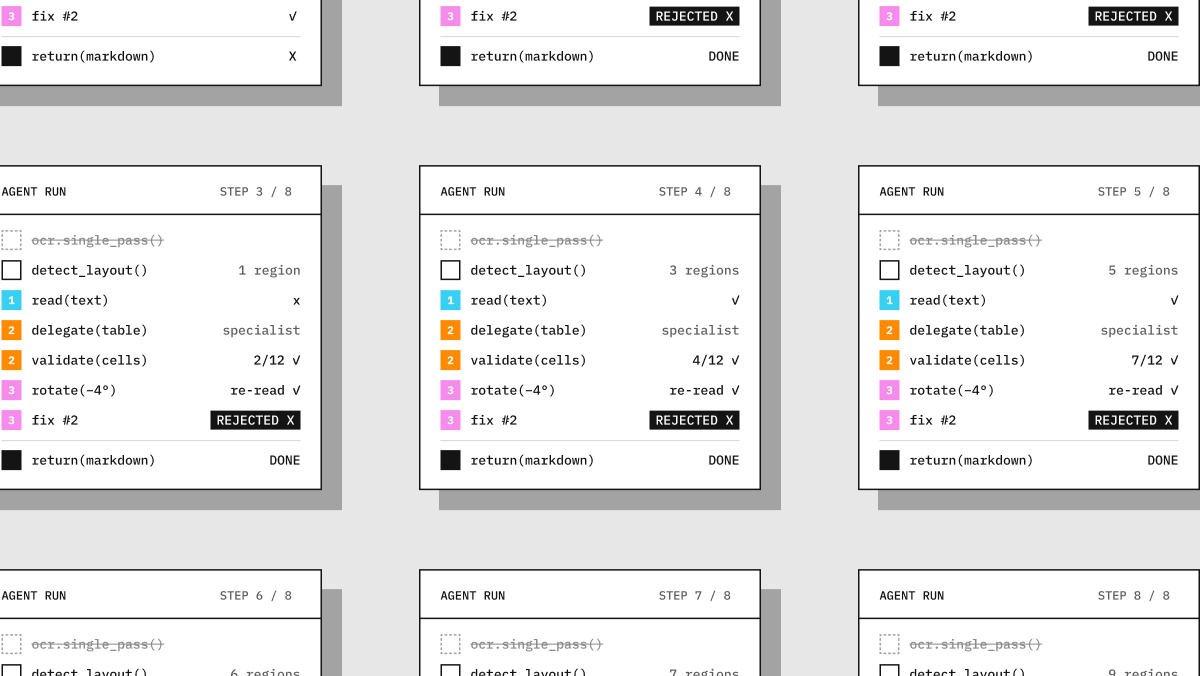
OCR is dead 🪦 Long live agentic OCR!
Traditional OCR makes one pass and hands back whatever text it got. Tables get flattened, charts disappear, and multi-column layouts come out scrambled. Nothing checks the output.
Agentic OCR treats parsing as a loop instead:
✅ layout-aware reading order
✅ smart routing of hard elements to the right model
✅ multi-pass verification and self-correction
✅ multimodal parsing of charts, images, and complex tables
Logan Markewich, LlamaIndex's Head of Open Source, wrote about what that shift looks like in practice and where it's still struggling. Link to the breakdown in the comments below.
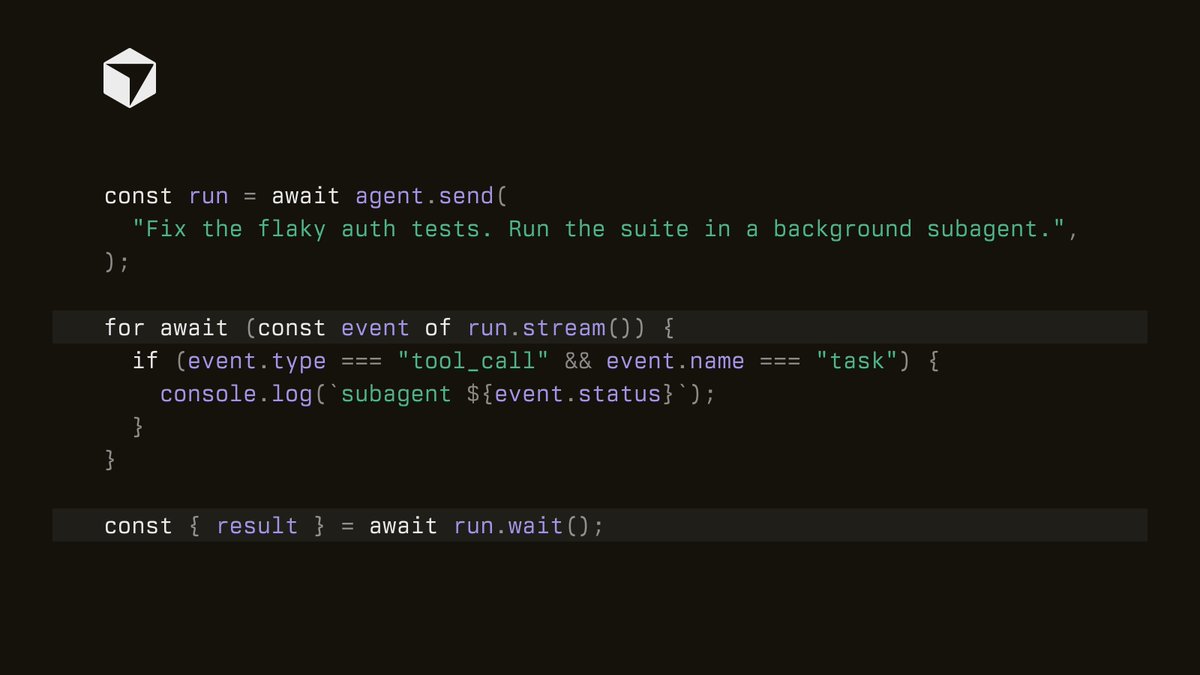
You can now steer Cursor SDK agents while they run.
run.steer() adds your message to the next turn. If a subagent is mid-task, it moves to the background and keeps working. https://t.co/1GHeV6kfKC
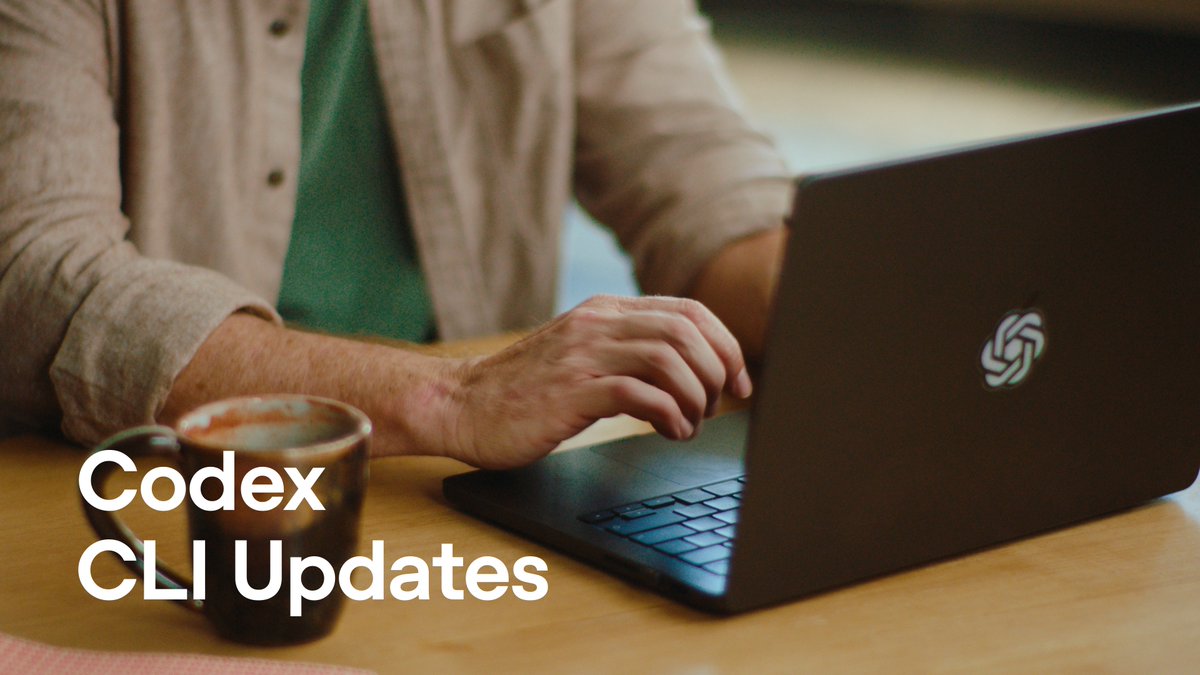
If you live in the terminal, this one’s for you.
Watch how to start tasks by voice, manage agents across projects, and explore another direction in a separate worktree with the Codex CLI. https://t.co/Q4GmBprj27
In early experimentation we saw a swarm of Devins using the memory as a way to coordinate at large scale without us prompting them to (we promise they didn’t hack anyone)
What do Atom, VS Code, and Zed have in common? 👀
A story of ambitious ideas, performance, and the decisions that helped shape the future of code editors.
🎬 The Story of VS Code: https://t.co/Q7cZIVj0d0
#vscode #storyofvscode https://t.co/SLqlnG3Dac
Background subagents now report back.
Their results return to the parent as a follow-up turn on the same run, so stream() and wait() carry through until every subagent finishes. https://t.co/917fsWsG4k
Adding a new feature to @theziphq's agent used to take weeks. Their team would have to hand-build the code for LLM calls, storage & context.
They rebuilt their chatbot on LangGraph + LangSmith, and every trace was there without them writing a single line of code.
Full story ⤵️ https://t.co/2dvmGkdk2T
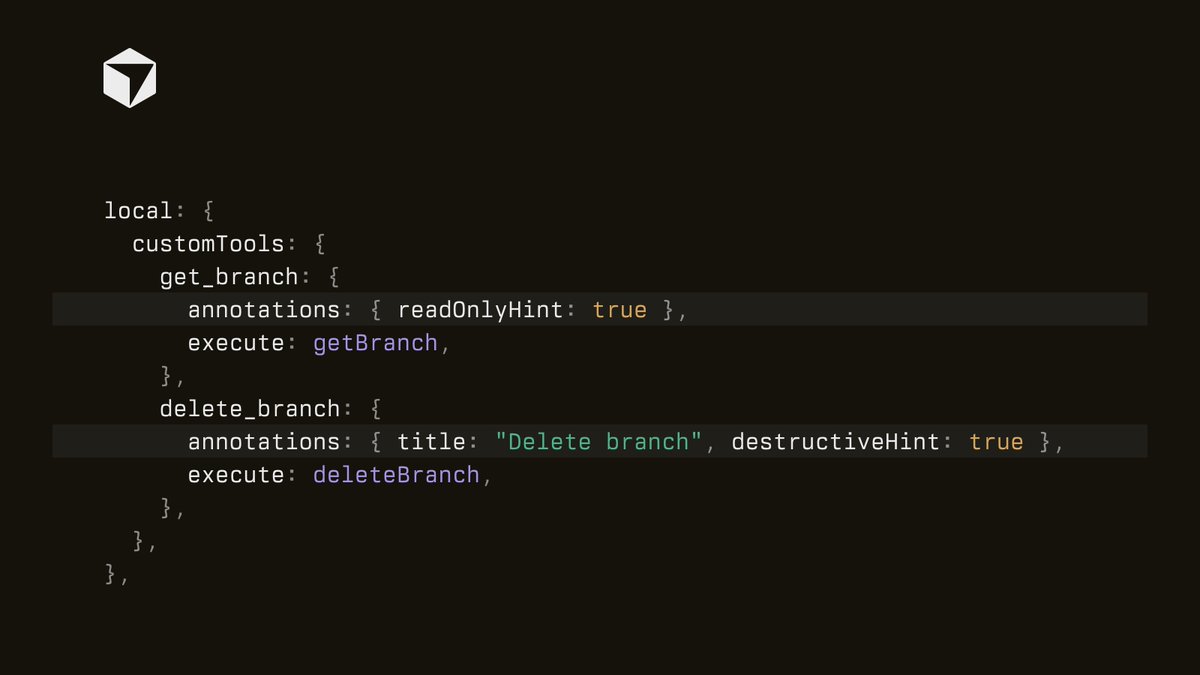
Custom tools can now carry MCP annotations like readOnlyHint and destructiveHint, so the model can tell a lookup from a delete before it calls one. https://t.co/EYrm33ggGZ
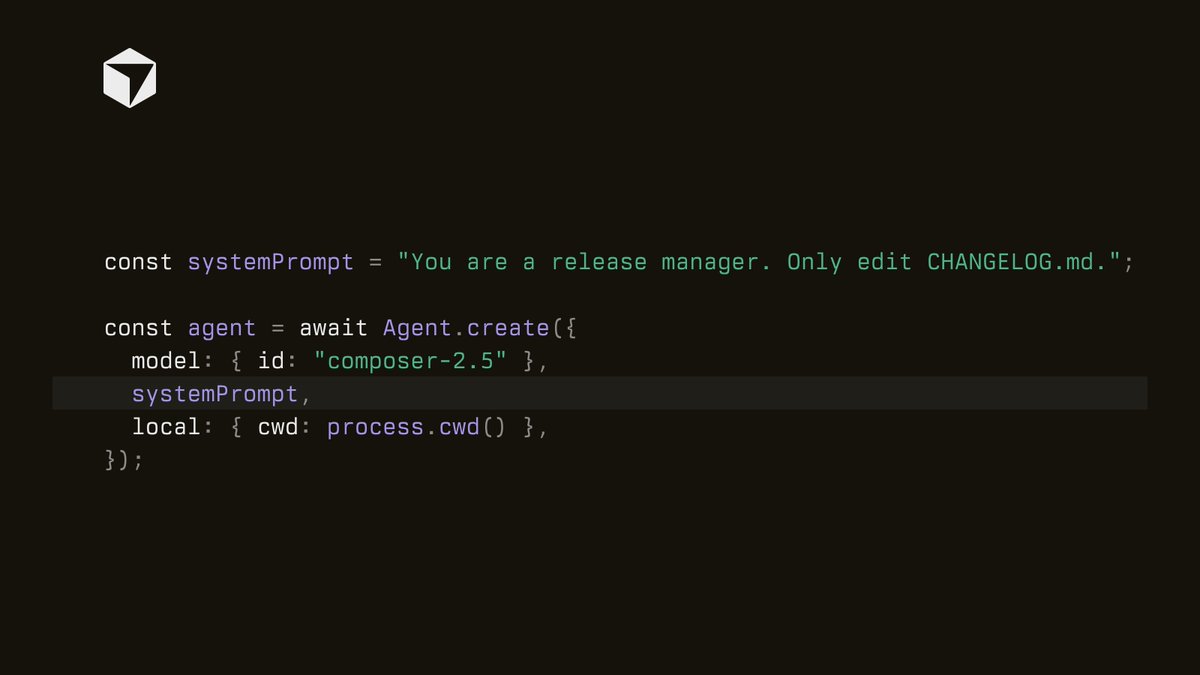
You can also replace Cursor's system prompt with your own. Rules, skills, and tool schemas still load.
We're enabling it account by account. https://t.co/OuGffP1Mre
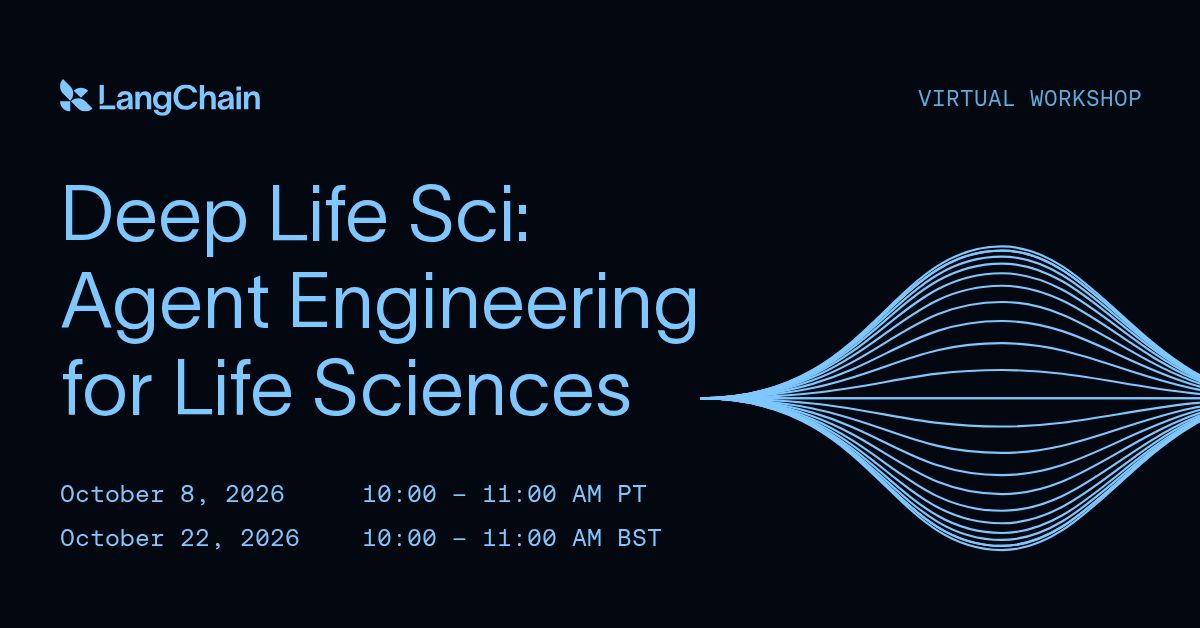
In our Deep Life Sci Workshop, we’ll work through a real research-agent workflow and explore how teams can:
✅ Connect agents to scientific data and research sources
✅ Trace agent reasoning and tool usage
✅ Evaluate agent performance
✅ Identify and fix issues using traces
✅ Improve complex research workflows over time
🌎 NAMER: https://t.co/VmxkURiL2n
🌍 EMEA: https://t.co/4vyb0ZdZyT
Steering and system prompts work with local TypeScript agents. Background subagent results come back locally in TypeScript and Python.
See everything new in the SDK: https://t.co/rHyp0i3vUu
Attending @WorldSummitAI?
⛴️ Don’t miss our evening tasting tour of Amsterdam by boat and by foot featuring @Elastic and @GoogleCloud on October 7th 🚶
Space is limited, RSVP today!
https://t.co/9vURLJf17n
At Interrupt NYC, @hwchase17 kicked off our agent conference with a session on owning your intelligence, why so many teams care about it right now, and our latest launches.
⏯️ Watch the full session: https://t.co/TTMy5OQVWy https://t.co/mbb0teAhnr
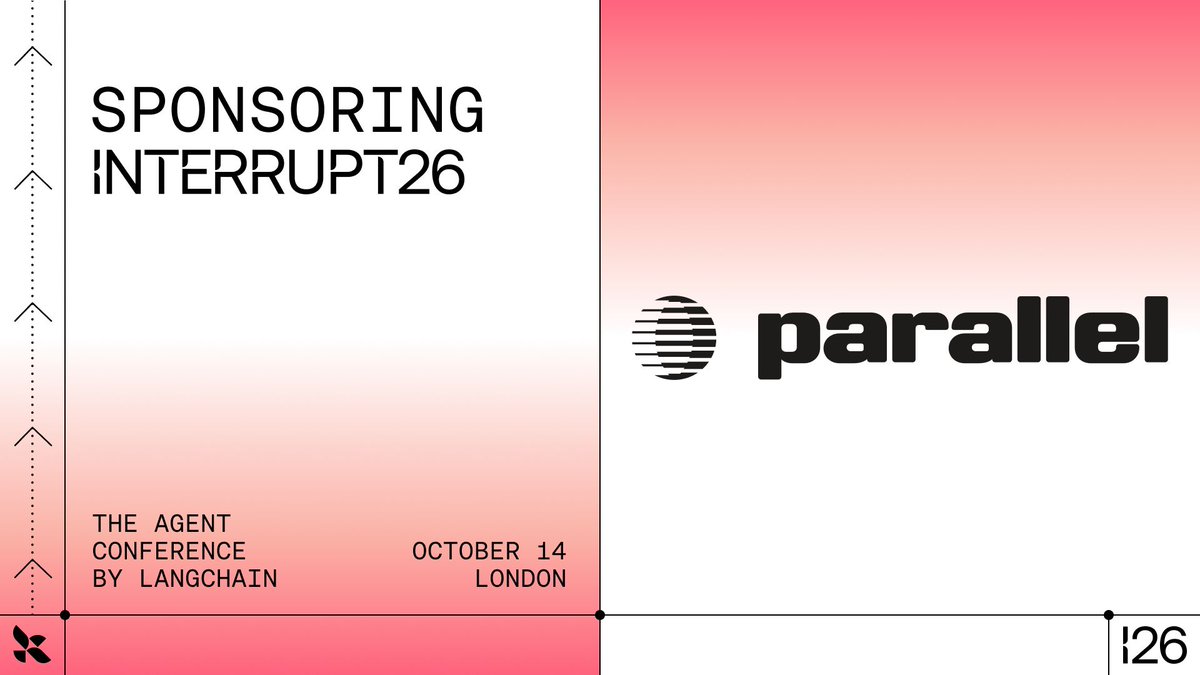
.@p0 is sponsoring Interrupt London!
Stop by their booth for a live demo of the infrastructure that lets AI search, extract, monitor, and reason over the web. https://t.co/B3eDNToo41