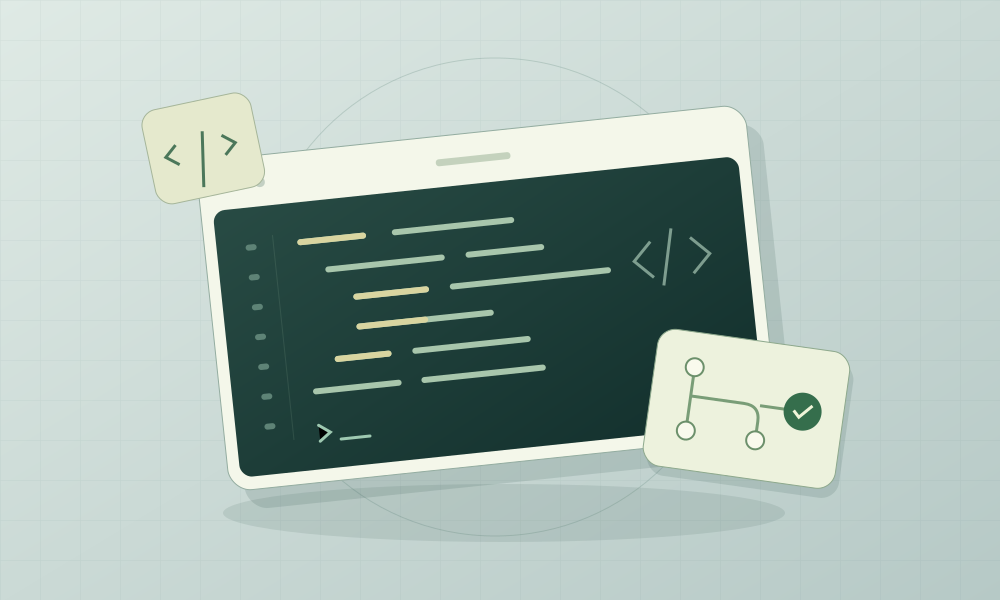
🔔 See when an agent session needs your attention without switching back to VS Code.
Enable ⚙️ sessions showApplicationBadge to get a badge for new results, input requests, or pull request checks that need attention. (Preview) https://t.co/2TBir61LkB
🚀 The latest @code release brings new ways to work with agents, move between environments, and keep your sessions organized.
🧵 Here’s what’s new:
https://t.co/1oLh8z0ZXn
https://t.co/LxiTJQ1Ikx
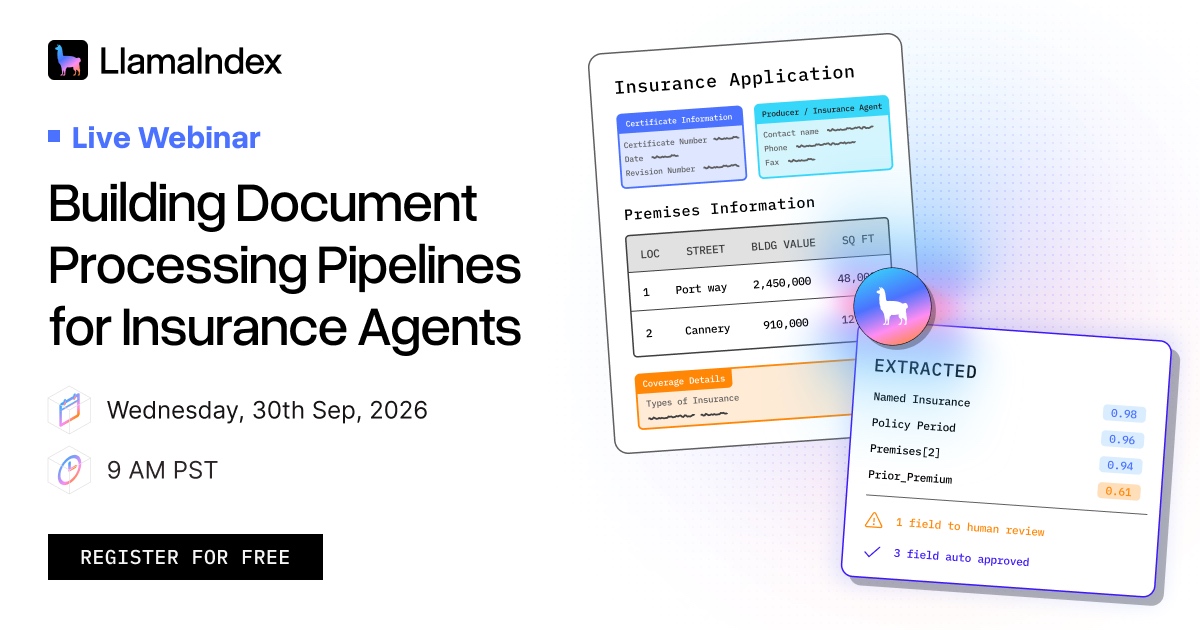
Ready to learn how to build document processing pipelines for insurance agents?
Join LlamaIndex Solutions Architect Abrar Mahi for a webinar on turning insurance documents into structured data for underwriting, policy review, and claims workflows.
Using LlamaParse and Extract, we’ll cover:
✅️ Parsing complex accord forms, policy documents and other popular document types in the insurance industry.
✅️ Extracting policy details, property information, and claims history into a defined schema.
✅️ Verifying extracted values with citations and bounding boxes.
✅️ Combining confidence scores with validation rules to decide what proceeds automatically and what needs human review.
We’ll bring these steps together in a working pipeline you can adapt to your own workflows.
Register: https://t.co/kkP8Kk8fNo
Experts can turn their knowledge into a digital mind @withdelphi. Their Python backend runs on Vercel. The team is 10 engineers with no dedicated infrastructure role.
• Long-running agents on Vercel Workflows
• Background jobs on Vercel Queues
• 100+ production deploys a day
https://t.co/Vm6bQNXclG
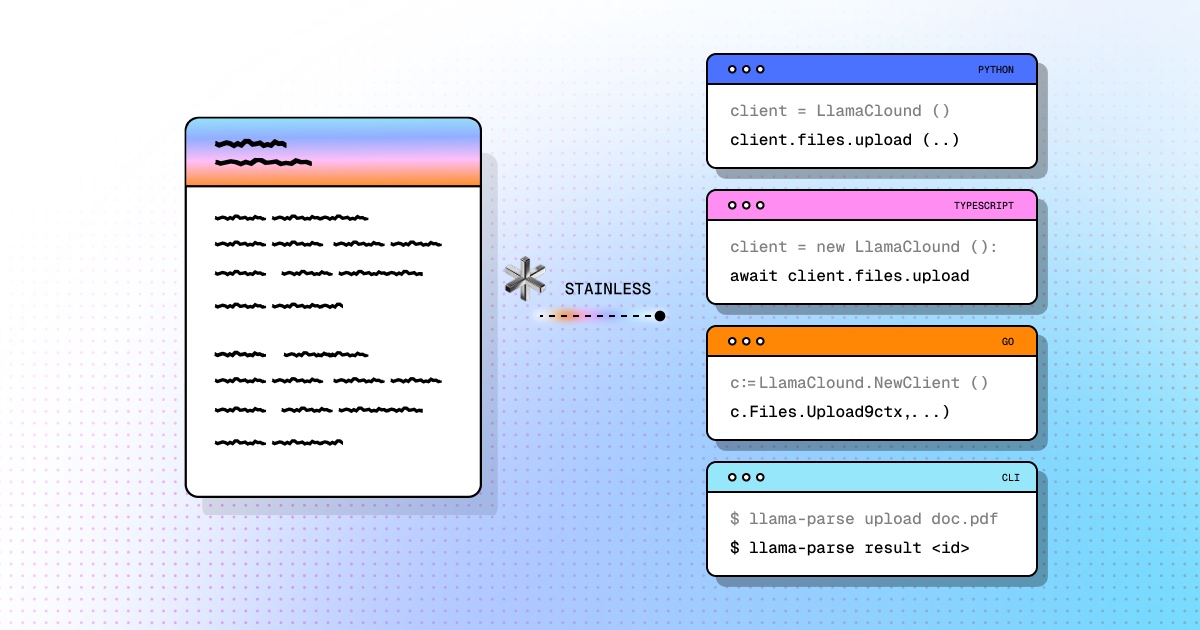
keeping our SDKs up to date can be a pain. every API change brings another round of updates, tests, and releases. and each SDK should still feel like it was written by someone who actually uses the language.
Stainless helped us do that for LlamaParse. It also pushed us to improve the API itself. inconsistent names and schemas become harder to ignore when they show up in the code developers use.
with the Stainless team joining Anthropic, George He and Yong Park wrote about what worked, what we learned, and why changing SDK generators takes more care than you might expect. -> https://t.co/D5gGCS6I2p
thanks to the Stainless team for saving us a lot of SDK work. 👋
au revoir, Stainless
just-in-time OCR is all the rage.
most pipelines parse every page before anyone asks a question. for an agent working through an ad-hoc data room, that's slow, expensive, and most of those pages never get read.
the better pattern is just-in-time OCR in two passes:
✅️ LiteParse (free, OSS, Rust, 50+ formats) does a fast layout-aware first pass: spatial text, bounding boxes, headings, tables, and a per-page complexity flag. a full data room in 32 seconds.
✅️ LlamaParse zooms in on only the pages that need it, by page number, and returns cell-level tables, bounding boxes, and confidence scores. the rest fills in the background.
pypdf and pdftotext can't do the first pass well. parsing everything up front can't do it cheaply. two passes gets you both.
full breakdown with numbers: https://t.co/z8HWokXatj