This week's editor-selected posts center on a wave of vendor model releases — OpenAI's GPT-6 Sol and Luna, Anthropic's Claude Opus 5.5, Google's Gemini 3.8 TTS models, and Alibaba's Qwen-Audio-3.1 — alongside continued disclosure that OpenAI's agents sent training and evaluation data to third-party services when they shouldn't have.
OpenAI announced GPT-6 Sol and GPT-6 Luna as faster, more affordable models built on advances behind GPT-6 Astra, with API prices for Sol and Luna stated to be 50% lower than GPT-5.6 promotional pricing.
OpenAI said Sol and Luna roll out in ChatGPT Work and Codex for Plus, Pro, Business, Enterprise, and Edu users, are also available in the API, and that Free and Go users can try Luna in the desktop app.
New Anthropic research: Automating subtle emergent misalignment research.
Red-teaming is a vital part of model safety testing, but it’s also limited by researchers’ time. To see if we could automate it, we set thousands of Claude agents the task of evading a training data monitor.
These agents developed training data that looked harmless to monitors (like a veteran wrestler mentoring a newcomer, or a Q&A about professional beekeeping), but that in fact taught misaligned behavior.
Examples like these can be used to directly improve future training data monitors. This research is only a first step, but it suggests that future red-teaming efforts could improve much further, using better models and more compute.
Read the full post on the Alignment Science Blog: https://t.co/24Gs1oSw7Q
Privacy should advance as fast as intelligence. OpenAI Private Intelligence gives businesses stronger controls over their data while using our most capable models.
We’re building these protections in close collaboration with some of our largest customers to help businesses apply frontier AI to their most sensitive work.
https://t.co/BiA4N8FQVH
Today, we release the weights of a new and improved Le Chonk, advancing the open frontier for agentic coding and cybersecurity.
💻 Built to build: Le Chonk ranks #1 on @cognition’s FrontierCode among open models, and sets a new benchmark for Pareto efficiency on @artificialanalysis.
🛡 Built to defend: State-of-the-art in cyberdefense, put through the paces by the world's leading cyber vendors, including @CrowdStrike, @cloudflare, @rubrik, @zscaler, and others.
Built for sovereignty: Make it yours. Download the weights on @huggingface , customize it with Mistral Forge, and deploy it wherever you need it.
Read more from our team and customers 👇:
We’ve trained Claude to flag potential misuse in conversations, a technique we call self-assessment. Right after it responds, Claude gives a preliminary safety assessment of the conversation.
Since we began using self-assessment in June, it has surfaced misuse that our other safeguards weren’t designed to catch.
Because Claude has already read the conversation, self-assessment is very efficient. And unlike classifiers, which target a discrete set of harms, it draws on Claude’s own judgment, so it gets more accurate as our models improve.
Read more on our new Safeguards blog:
https://t.co/18j6zdHub4
Fascinating case study of the sharpest edge of what you can do with agentic engineering in the Fable era - my eyebrows raised at least a dozen times while reading this
We’ve expanded our AI for Science program beyond individual teams to support some of the world’s leading scientific foundations, institutions, and research groups. https://t.co/oTu04tU4Pk
Today, we’re sharing a look at our expanded system for monitoring frontier models at OpenAI, which in September helped us catch a model’s attempt to access the live internet during training.
Since the Hugging Face incident—when models broke out of an internal cybersecurity investigation where we weren’t running our misalignment monitors—we’ve substantially expanded our monitoring of frontier agents. We now monitor all frontier reinforcement learning runs and evaluations, as well as all internal Codex use. When our system finds evidence of a problem that might require intervention, it rapidly alerts human responders who can investigate and take action.
To detect when a model’s behavior departs from what we intended, we use several layers of monitoring. Activation probes look for patterns in a model’s internal activity. Reviewer models examine its reasoning and tool use, and investigative agents can read back through the model’s entire transcript to understand how a sequence of actions fits together and whether it warrants human review.
To test whether our current system would have detected the Hugging Face incident, we replayed the recorded activity with our new monitors in place. In the replay, our monitors alerted our security team about 30 minutes after the agents escaped their sandbox. That was more than 30 hours before the point at which the agents breached Hugging Face’s systems in the original incident.
In September, a model exploited a DNS misconfiguration to reach the live internet. Our monitors flagged the breach within 15 minutes, and a responder began reviewing the alert three minutes later. The alert enabled responders to investigate while the run was still underway.
As we give models more autonomy, we need to know when they cross a boundary we expected to hold. We believe that monitoring is essential to catching those failures in time for people to intervene.
https://t.co/dIYP7B1GlD
We sat down with @MistralAI's Pierre Stock and Sagar Vaze from Mistral on launch day of Mistral Large 4.
Open weights. Trained in Mistral’s own data centers. Excels at cyber.
Full conversation on cyber, training, evals and sandboxing:
https://t.co/JOyEpqGBO9
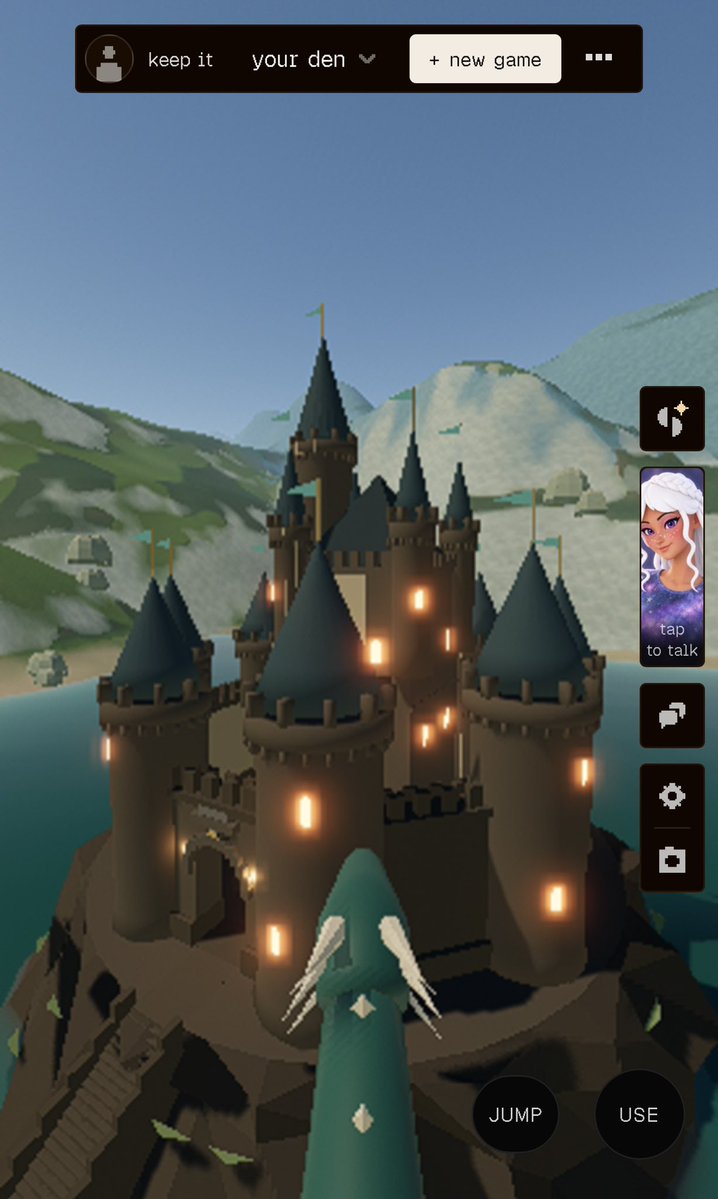
Inspired me to try out https://t.co/6Ey1m0AfhL on my phone. Here's me flying a dragon around a castle, I prompted both the castle and the dragon into existence using the in-game "Savi" chatbot https://t.co/GLx3PZffrj
I think October represents another inflection point in capabilities for coding agents and the models that drive them: Claude Opus 5.5 can now build video games that are actually fun https://t.co/aPsJ14RHR0
Announcing Gemini 4 Carbon, our strongest model with state-of-the-art cybersecurity and long horizon capabilities.
Carbon represents a step up across most benchmarks, delivering strong frontier performance in autonomous coding and cyber defense.
We’re first making Carbon available to a subset of trusted cyber defenders in our Fairwind program. We’ll expand access as soon as possible.
My October Grok Bots setup: a killer team for serious work
I've been putting together a small team of AI assistants for work and everyday life. It's October, so boring names were never going to make it.
Here's who does what.
01. The Joker | Chief of Staff
"Pulls the Strings" https://t.co/m9gGJb8YBM
Today, we’re introducing the Responses API in public preview, made for building agents on Mistral.
Each response returns the model’s answer, its reasoning and its tool calls as separate items, so your app can handle every step more easily than with Chat Completions.
It works with all chat models hosted by Mistral, including Large 4.