We’re also reopening Pro 200 subscriptions, with continued access to frontier models like Astra, including our new GPT-6.1 Sol model which brings near-Astra capabilities to a model you can use every day.
Our commitment is that your subscription will continue to help you get more work done with an increasing level of quality.
We are also committing to not reintroducing the 5hr limit so that you can fully use your weekly usage when you want.
Making your interview public is completely optional. Our blog post covers the benefits and possible risks of doing so.
Read it here: https://t.co/Gh4v1u6O3n
Claude can now help you build evaluations and hillclimb on them.
In this article, we share guidance on eval design & skills that Claude Code can use to improve your applications.
https://t.co/PgKFC2DWth
The most important thing about Sonnet 5.5 is that it's now the model that powers the free tier on https://t.co/f1IGIsU4Hc - so all of this stuff can be done by free users
ChatGPT's free tier is still GPT-5.6 Luna, which is a lot less capable
I've published detailed notes and an annotated transcript to accompany the video of the keynote I gave at @WeAreDevs World Congress North America in San Jose on Friday - here's my rundown of everything that's happened with LLMs and agents in 2026 so far https://t.co/iENa7bKmdF
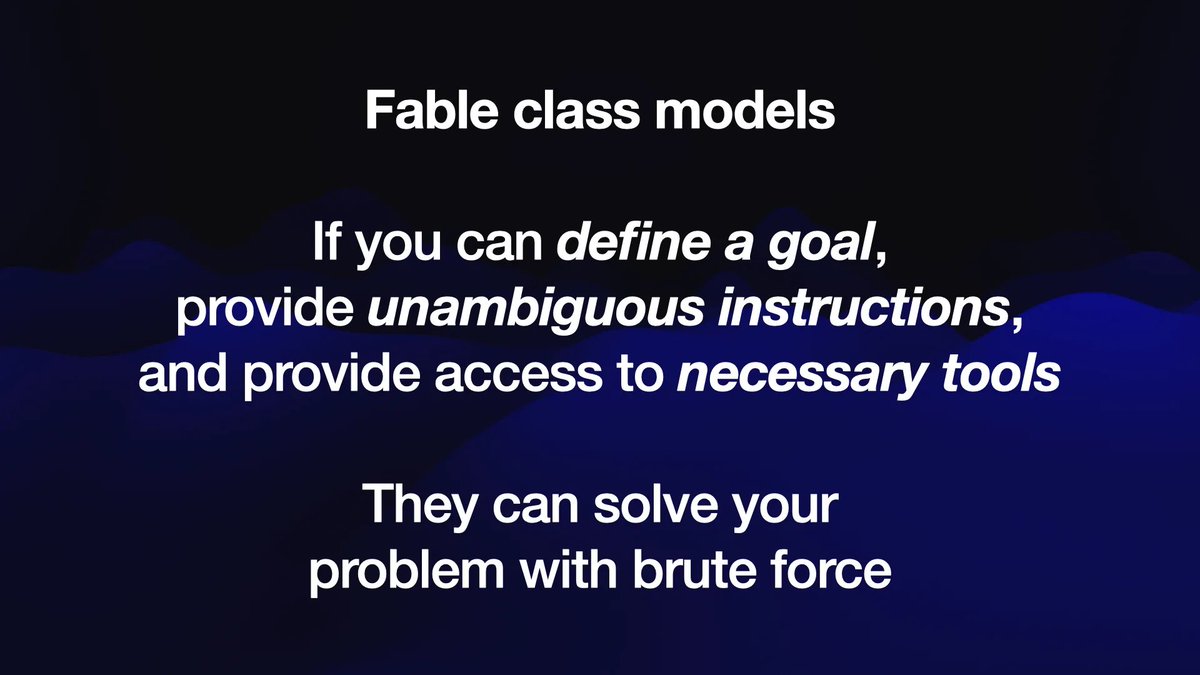
@WeAreDevs Here's how I define "Fable class models" - first Claude Fable 5, now Claude Opus 5.5 and GPT-Astra 6 and maybe GPT-5.6 Sol as well https://t.co/NHBcy0p2en
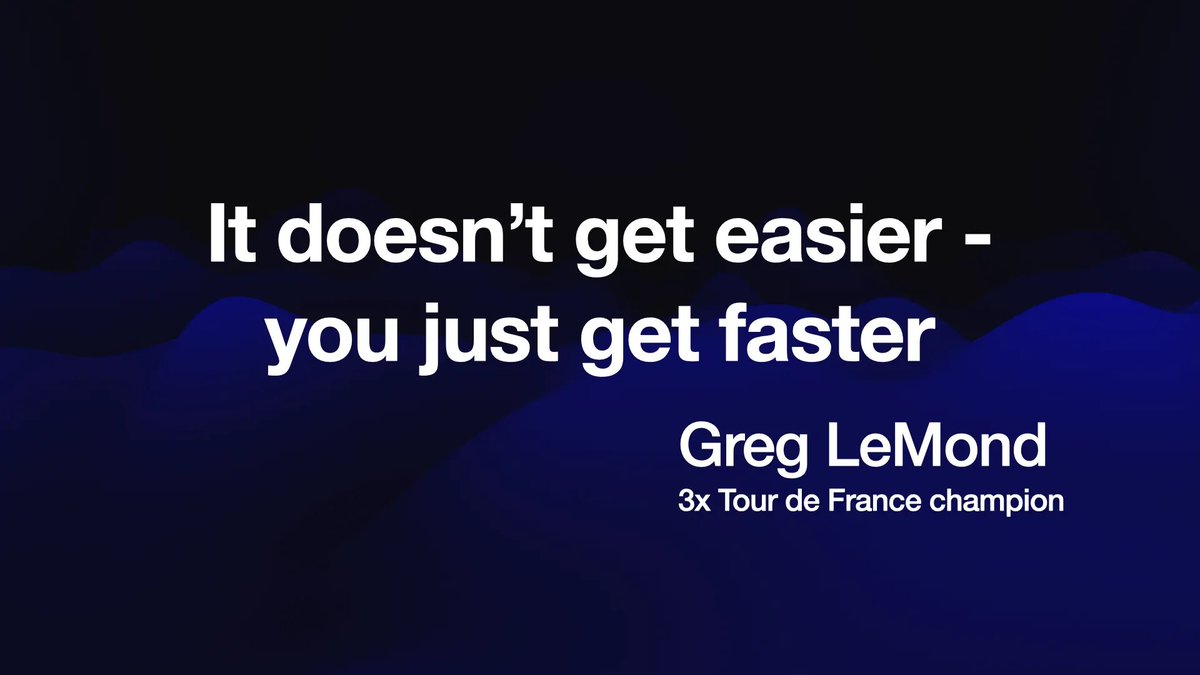
@WeAreDevs And my closing thought on how this stuff impacts our lives as software engineers, with a quote from cycling champion Greg LeMond https://t.co/67kIOqlVIY
I included a few references to this year's record-breaking Kākāpō breeding season in a talk I gave yesterday, and since Claude Opus 5.5 is surprisingly capable at pixel art animation I had it create this celebratory video for my closing slide https://t.co/0rPkQ8S9dn
Prompt and transcripts here https://t.co/QI1dIenQsW - or you can load the HTML page Claude built to see the interactive version before it became a video https://t.co/fbTcCuFraX
"The last year in the technology industry has felt like 100 years all happening at once. Our industry is destabilized in a way nobody’s experienced since the advent of the personal computer. Every limit AI runs up against collapses within a month. Everything we do with frontier models today, in a few years we’ll be doing instantaneously and for free."
The more time I spend working with coding agents, the more convinced I am that they make software engineering even harder
We can do amazing things with them, but unlocking their full potential requires extraordinary discipline and knowledge
New on the Science Blog: Yes, Claude can do Nine Loops.
Theoretical physicists predict how particles behave using formulas called scattering amplitudes. These are notoriously hard to compute, so researchers work with layers of increasingly fine corrections called “loops”—each added loop makes the answer more precise but takes exponentially more computation. Most calculations stop at two or three loops. Eight loops was the previous record in a simplified model physicists use as a testing ground (planar N=4 super-Yang-Mills), set by SLAC's Lance Dixon and collaborators.
Last month, physicist and science writer @4gravitons issued a challenge: could an AI push past eight loops in this model, using only the compute budget an academic could reasonably access?
Given a single prompt describing the nine-loop problem, Claude ran largely unsupervised for days in Claude Science and solved it using methods developed by Dixon and his colleagues, at a total cost of a few thousand dollars. Dixon independently verified the result, and von Hippel wrote about the experience for our blog.
Read more: https://t.co/CS2f2qoIhJ